
Product added to cart
What Role Did Portrait Paintings Play in People's Lives Before 1839?
Since the practice of capturing an image onto a surface through the use of light- which we now know as photography- became available in 1839, people have been using this as a means to capture images of life. For over a century now, it has been commonplace to see photos of family, friends, and important life achievements. But before photography was a popular practice, people relied on painted portraiture, immortalizing themselves through pieces of art. Portrait paintings did play an important role on record.
At the start of the Middle Ages in Europe, painting techniques were only taught to leaders of the Christian church. Art was viewed as an unfit activity for common people and was simply used as a tool to spread the teachings of Christianity further. Some of the earliest Middle Age portraiture paintings are found in religious texts, illustrating the meaning of the words on the page. As art began to be practiced by common people in the latter half of the Middle Ages, skilled artisans were hired in droves to fill churches with images of Biblical characters, angels, Saints, and church leaders.
In the late 13th century, the Renaissance Period began, which was heavily influenced by highly esteemed Italian artists such as Leonardo Da Vinci. The Renaissance focused on detailed and realistic paintings that displayed an incredible level of artistic skill. It was during this time that portraiture began to become highly sought after not only by royalty and the elite but by everyday people. Many viewed portraits as a way for them to become immortalized, therefore raising their status in life. After all, Da Vinci's portrait of Mona Lisa has become one of the world's most famous pieces of art. With Mannerism, also sometimes known as The Late Renaissance, a new style of portraiture came. While the Renaissance artists focused on the realism of their portraits, Mannerism focused on heightening the qualities of the subject. Agnolo Bronzino's famous painting Venus, Cupid, Folly and Time is a wonderful representation of the over-exaggeration of features that can be seen in Mannerism.

Baroque emerged in the 17th century. This intense and dramatic artistic style heavily features rich, dark colors. Often, the subjects of portraits in the Baroque era would be painted wearing elaborate clothing or even costumes. During the Baroque period, the technical skill standard for artists was exceptionally high, and those who could rise to meet the standards were in high demand. Rembrandt, one of the most famous and influential artists of the Baroque period, painted portraits of the elite from all over the world who paid top-dollar for his pieces. Playful than Baroque, the subjects of Rococo style can usually be found frolicking in the scenery of surreal beauty or enjoying all of life's luxuries within the walls of an ornate mansion.
The Neoclassicism Movement came about during The Age of Enlightenment. During this time, people had a renewed interest in the classic styles of art, especially those which had been popular in ancient Greece and Rome. Because of this, most portraits painted during this time featured the subject in elaborate costume clothing- styles which would have been popular in ancient times. Painted portraiture was becoming more and more financially acceptable to members of the common society, and the public's general interest in art was on the rise. Portrait paintings were popular on memorizing precious moments. At the beginning of the 19th century, Neoclassicism was in competition with Romanticism, a style of art that glorified the nature and events of the past.
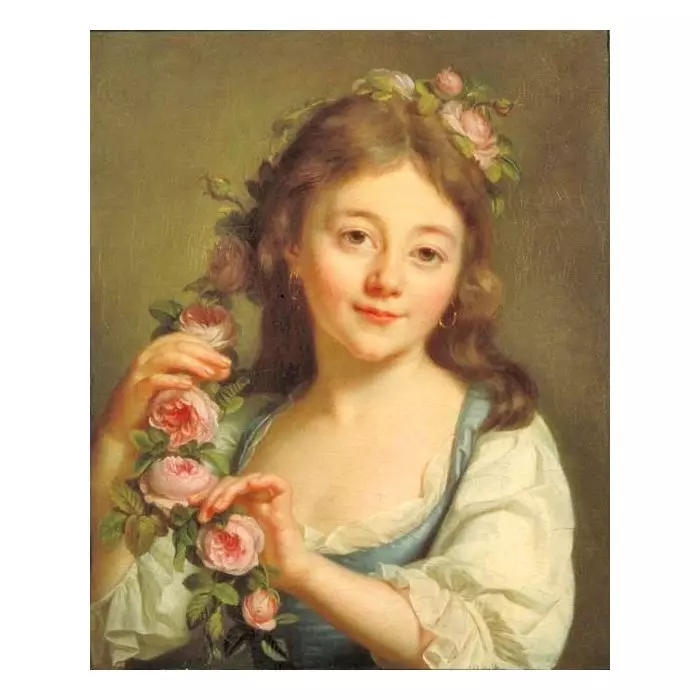
It was not for decades after photography was invented that influential artists such as Pablo Picasso, Vincent Van Gogh, and Frieda Kahlo would introduce their own unique styles of painted portraiture. In fact, the camera has even assisted in creating new and exciting forms of art. We all long for a way to immortalize ourselves and remind future generations that we were here. It is certain that portraiture, in all of its forms, will remain an important and widely popular art form long after we have become a part of the past.
Categories: Art Introduction and Analysis
There are no comments yet