
Product added to cart
Luminous, Vibrant, and Compelling World of Impressionist Artists
Impressionism is an art movement developed in France and it is one of the most famous, but paradoxically the least understood expression in art history. Even the term “Impressionists“, coined by an art critic and journalist Louis Leroy, was supposed to be a witty description for the paintings made by the group of artists that actively created from 1867 to 1886. As an outgrowth of Realism, Impressionism was primarily interested in transcribing visual reality as it is reflected upon the retina of the painting artists within a short period. Therefore, there is a crucial difference between Realism and Impressionism, since Impressionist artists preoccupied themselves with a personal and subjective transcription of reality onto the surface of canvas.
Famous Impressionist Artists
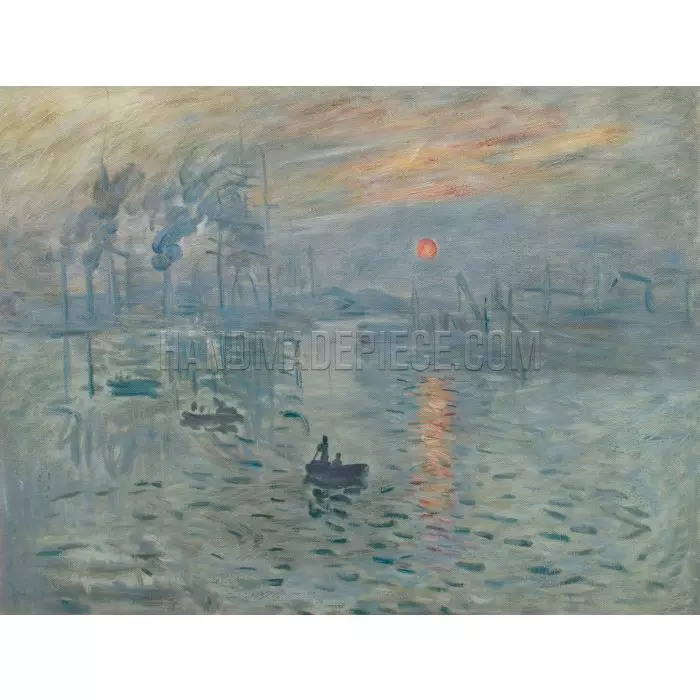
The group of the future Impressionist artists shared a general sense of animosity toward dominant academic standards of fine art and were gathered under the name Cooperative and Anonymous Association of Painters, Sculptors, and Engravers. Composed of Claude Monet, Alfred Sisley, Pissarro, Edgar Degas, Renoir, Guillaumin, Berthe Morisot and Cézanne, this group held their first exhibition in 1874 arranged in the Photographer Félix Nadar’s gallery. It was here where they gained infamous name “Impressionists“ according to Claude Monet’s painting Impression, Sunrise, 1872. Together they held eight exhibitions in Paris until 1886, but it was the third one where they accepted and acknowledged the satirical term coined by Leroy.
Main Characteristics of Impressionism
In the time when academic standards of fine art required religion and history as essential themes to the art world, Impressionist artists made everyday life of modern Paris the main subject matter of their paintings. Charles Baudelaire recognized this new element of painting the modern society and wrote The Painter of Modern Life, 1863.
The main characteristic of Impressionist oil paintings are depicting an optical phenomenon of light affecting natural objects. This effect can be achieved by using complementary colors which are applied with fast-moving brush strokes. These colors merge into each other and create a sense of space, and this can only be seen when standing far from the paintings. Plein air paintings embody another very important characteristic of Impressionist oil paintings. Impressionist artists embraced painting outdoors from the Barbizon school in order to minutely depict the appearance of the outdoor settings in a various momentum of natural light and weather conditions. Capturing the inconsistency of the visible natural surroundings, Impressionists had to paint very fast and for a practical reason use smaller canvases.
Main Subjects of Impressionist Paintings
When it comes to the subject matter, Impressionist artists and their oil paintings can be seen from two different angles. The first group focused more on the modern society of Paris, while the other concentrated on the outdoor surroundings and landscapes.
That first group mainly depicted the social world in which the figures and their context must be analyzed in order to make the modern reality understandable. Artists such as Pierre-Auguste Renoir and Edgar Degas are great examples of such Impressionist oil paintings. Dance at Le Moulin de la Galette, 1876 by Renoir is a genre painting where absorption of a natural light appears to be astonishing. The shimmering shadows of light shining through the trees are marvelously depicted within the crowd of dancers. The color palette is bright and almost dazzling, which is a striking characteristic involved with the Impressionist oil paintings in general. Through these color effects, Renoir wanted to depict his own observations of how the sunlight’s intensity changes the palette of natural objects. On the other hand, Edgar Degas was well-known for painting young ballerinas. Unlike other Impressionist artists who focused more on the outdoor settings, his focus was working in atelier to draw figurative oil paintings. His ballerinas were mostly depicted from the raised angle, before or during the performances. In this manner, Degas was showing the random glance within the momentum, capturing rehearsal routine and ballerinas endeavor for perfection.

The second group that concentrated on landscape oil paintings was occupied with the impressions of the natural light and how it altered the visible world. These elements are easily seen in the paintings of Claude Monet and Camille Pissarro. In Impression, Sunrise, 1872, Monet was capturing the momentary effects of the rising sun overviewing the harbor at Le Havre. The landscape he presented takes an abstract form that occurs under the sunlight in natural surroundings. Although Monet was depicting a cloudy atmosphere of fog blended with the industrial smoke of the city, his composition includes brighter color palette. With Avenue de l'Opera: Snow Effect, 1899, Camille Pissarro suggests, even by the name itself, the inconsistent effect of snow he was capturing. The cityscape emerged into the flickers of the light spots that were transferred to the canvas with a luminous color palette. The Impressionist artist concentrated on the impressions of the ephemeral aspects of weather conditions and its reflection on natural surroundings.

Post-impressionist Artists
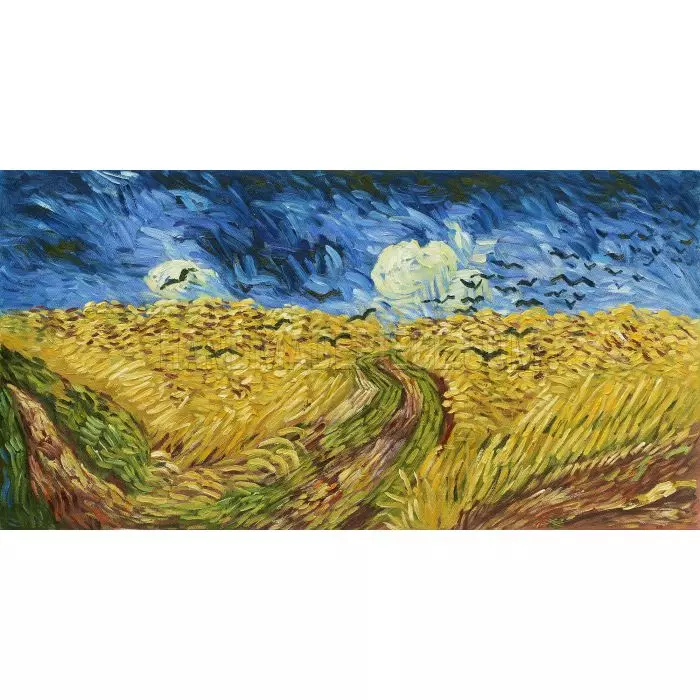
Georges Seurat, Paul Cézanne and Paul Gauguin were the artists who participated in a few of the eight Impressionist exhibitions held in Paris. Meanwhile, they were also grouped within another term of Post-Impressionism, the movement in 1886, but the term was coined later in 1906 by an art critic Roger Fry who tried to explain the development of modern paintings in Europe after Monet. From Impressionist artist, they obtained the technique, thick layer of colors, fast-moving brush strokes and everyday life as a subject matter. However, as opposed to the mere impression of naturalistic surroundings, some Post-Impressionist practiced scientific approach to the painting such as Paul Signac and Georges Seurat. Paul Cézanne relied on the geometrical forms creating somewhat abstract depictions, which would be the basis for the Cubism movement. On the other hand, Vincent van Gogh and Paul Gauguin used symbolism, ravishing forms and dynamic colors as tools to transmit their personal emotions onto their canvases. Accentuating texture with the use of thicker brush strokes, the two of them created deeply expressive art pieces.
Being one of the first generations of painters to live and feel the fast-moving world of modernization and industrialization, Impressionist artists strove for originality and new style that would present such rapid world they lived in. Contemplating urban developments of Paris, they concentrated on the transience of the visible world, using fast-moving brush strokes, thick pallet, and vibrant, bright colors. Impressionist artists were the ones that enabled the further development of modern painting which gradually broke solid recognizable forms starting with Post-Impressionism and expanding further into the abstraction.
Categories: Art Introduction and Analysis
There are no comments yet